
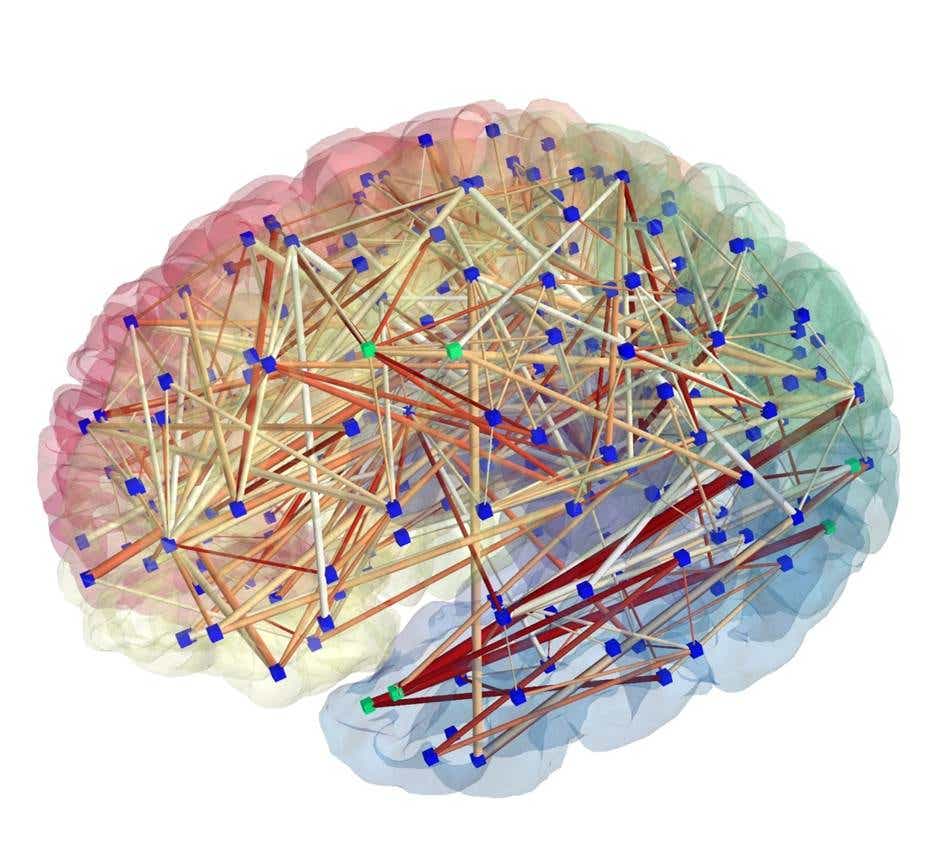
A high-level hallucinatory state in which the observer perceives masses of complex, innately readable geometric forms that appear to represent the underlying architecture of their own consciousness — including the structure of identity, memory, emotion, and cognition itself.
Description
Visual exposure to the inner mechanics of consciousness is among the most profound and philosophically challenging hallucinatory experiences reported in the psychedelic literature. It involves the perception of vast, intricate networks of geometric forms that feel innately comprehensible — as though each shape and pattern is a visual representation of a specific neurological process, cognitive function, or aspect of conscious experience. The observer does not merely see abstract geometry; they perceive what feels like thesource code of their own mind laid bare in visual form.
The experience typically begins as the geometric hallucinations of the psychedelic state reach their highest levels of complexity and dimensionality. At this point, the geometry transitions from being aesthetically interesting but semantically empty to becoming densely packed with felt meaning. Each geometric element appears to represent something specific — a memory, an emotion, a habitual thought pattern, a personality trait, a perceptual process — and the relationships between elements reveal how these components interconnect to produce the unified experience of consciousness. The observer may feel they are witnessing the architecture of thedefault mode network, the structure of theego, or the programming that generates the experience of being a self.
For many who undergo this state, the experience carries an overwhelming sense of revelation — the feeling that one is being shown something absolutely true and fundamental about the nature of mind and reality. Users commonly report feeling that they have understood "how consciousness works," "what the self really is," or "the underlying code of reality." During the experience, these insights feel utterly certain and profoundly important. However — and this is a critical caveat — upon returning to baseline, many of these revelations prove difficult to articulate, nonsensical when examined soberly, or too vague to constitute genuine insight. The felt sense of truth often survives while the specific content evaporates.
That said, some individuals do report extracting genuinely useful psychological insights from these experiences — recognizing self-destructive patterns, understanding the emotional roots of certain behaviors, or gaining perspective on how their mind constructs its experience of reality. The therapeutic potential of these states is a subject of active research, particularly in the context of psilocybin-assisted psychotherapy, where similar experiences of "psychological insight" correlate with lasting therapeutic benefit.
This effect is most reliably produced by high doses of sedating psychedelics with strong hallucinatory profiles — particularlypsilocybin,ayahuasca/DMT, and2C-C — and typically occurs at or near the peak of intense experiences, often alongside or immediately followingego death. It requires a dose sufficient to produce high-level geometric hallucinations and a significant degree of cognitive dissolution.