
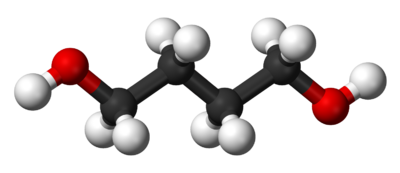
1,4-Butanediol (1,4-BD) is a clear, odorless industrial solvent that functions as a prodrug of gamma-hydroxybutyrate (GHB) in the human body. Upon ingestion, alcohol dehydrogenase and aldehyde dehydrogenase enzymes convert 1,4-BD sequentially to gamma-butyrolactone (GBL) and then to GHB, producing effects pharmacologically indistinguishable from those of GHB itself — sedation, euphoria, anxiolysis, and dose-dependent amnesia. The delay between ingestion and onset varies considerably depending on whether the stomach is empty or full, creating significant risk of redosing before the first dose has fully converted.
1,4-BD is widely available as an industrial cleaning agent and solvent, and has historically occupied legal gray areas precisely because it is not itself a controlled substance in many jurisdictions despite functioning identically to controlled GHB once ingested. This regulatory gap led to widespread recreational use in the early 2000s, often sold openly at gyms and health food stores under names like "Revitalize Plus" or "Thunder Nectar." Its availability and inexpensive cost have made it attractive to those seeking GHB-like effects, but its narrow therapeutic window — the difference between a recreational dose and a dangerous one — mirrors that of GHB and is compounded by the pharmacokinetic uncertainty of prodrug conversion.
Community experience consistently flags 1,4-BD as one of the more dangerous GABAergic depressants. The prodrug conversion delay means users may incorrectly assume a dose has failed and redose, resulting in profound, combined overdose when both doses convert simultaneously. Combined with alcohol, which competes for the same enzymatic pathway and simultaneously potentiates CNS depression, even modest amounts of 1,4-BD can produce respiratory depression, unconsciousness, and death. Experience reports in the database reflect both therapeutic use for anxiety and a sobering trajectory toward dependence and increasingly narrow control over dosing.
Safety at a Glance
High Risk- Accurate Measurement is Essential
- Start with 1.0–1.5 mL as an absolute maximum first dose if concentration is unknown
- Toxicity: Narrow Therapeutic Window The most dangerous characteristic of 1,4-BD is its steep dose-response curve. The differenc...
- Dangerous with: Atropa belladonna, Cake, Datura, Deschloroetizolam (+23 more)
- Overdose risk: LD50 is above the active dosage, and there is no danger of acute toxicity when this compound is t...
If someone is in crisis, call 911 or Poison Control: 1-800-222-1222
Dosage
oral
Duration
oral
Total: 3 hrs – 5 hrsHow It Feels
The first sign arrives fifteen to thirty minutes after swallowing the slightly bitter, oily liquid -- a faint warmth that blooms in the stomach and radiates outward through the torso like a slow internal sunrise. Muscles that had been carrying the quiet tension of the day begin to soften, as though someone were loosening screws you did not know were tight. There is a subtle shift in proprioception: the body feels lighter and more buoyant, and the boundary between you and the chair beneath you becomes pleasantly indistinct.
As the conversion to GHB completes in your liver, the come-up accelerates. A wave of sociability washes over you, dissolving the thin membrane of self-consciousness that normally sits between thought and speech. Words come more easily, laughter more readily; conversation feels like a warm current you can simply float on. There is a pronounced euphoria -- not the electric, jittery kind but something rounder and more embracing, like being wrapped in a favorite blanket while slightly drunk on good wine. Music sounds richer, its textures more layered, and the emotional undertones of songs seem to press directly against your chest.
At the peak, the euphoria deepens into a state that veterans often compare to the best moments of alcohol without the mental fog. Physical touch becomes intensely rewarding; handshakes linger, hugs feel necessary. There is a gentle disinhibition that makes the world seem fundamentally friendlier and more manageable. Some users report a subtle enhancement of color saturation and a feeling that lights have halos. The body feels heavy in a luxurious way -- limbs are warm and loose, and there is a deep muscular relaxation that borders on the narcotic. Time seems to pass more slowly, each moment stretching to accommodate its own pleasure.
The descent is gradual and merciful. The euphoria recedes like a tide, leaving behind a calm, drowsy contentment. Eyelids grow heavy, thoughts become slower and more diffuse, and the pull toward sleep becomes increasingly persuasive. Many people find themselves drifting into a deep, restorative slumber within an hour of the peak's end. The following morning often brings a surprising freshness -- a sense of having been genuinely rested, though the memory of the evening may carry a slight haze at its edges, as though viewed through frosted glass.
Subjective Effects
The effects listed below are based on the Subjective Effect Index (SEI), an open research literature based on anecdotal reports and personal analyses. They should be viewed with a healthy degree of skepticism. These effects will not necessarily occur in a predictable or reliable manner, although higher doses are more liable to induce the full spectrum of effects.
Physical Effects
Physical(7)
- Increased heart rate— A noticeable acceleration of heartbeat that can range from a subtle awareness of one's pulse to a fo...
- Insomnia— A persistent inability to fall asleep or maintain sleep despite physical tiredness, often characteri...
- Muscle relaxation— The experience of muscles throughout the body losing their rigidity and tension, becoming noticeably...
- Respiratory depression— A dangerous slowing and shallowing of breathing that can progress from barely noticeable reductions ...
- Sedation— A state of deep physical and mental calming that manifests as a progressive desire to remain still, ...
- Seizure— Uncontrolled brain electrical activity causing convulsions and loss of consciousness -- a life-threa...
- Tremors— Involuntary rhythmic shaking of the hands, limbs, or body, ranging from fine tremor to gross shaking...
Cognitive & Perceptual Effects
Visual(1)
- Drifting— The visual experience of perceiving stationary objects, textures, and surfaces as appearing to flow,...
Cognitive(6)
- Amnesia— A complete or partial inability to form new memories or recall existing ones during and after substa...
- Anxiety— Intense feelings of apprehension, worry, and dread that can range from a subtle background unease to...
- Delirium— Delirium is a serious and potentially dangerous state of acute mental confusion involving disorienta...
- Depression— A persistent state of low mood, emotional numbness, hopelessness, and diminished interest or pleasur...
- Disinhibition— A marked reduction in social inhibitions, self-consciousness, and behavioral restraint that manifest...
- Psychosis— Psychosis is a serious psychiatric state involving a fundamental break from consensus reality — char...
Pharmacology
Mechanism of Action
1,4-Butanediol is pharmacologically inert in its original form. Its activity arises entirely from enzymatic conversion to GHB (gamma-hydroxybutyrate), a naturally occurring neurotransmitter and the active species responsible for all psychoactive effects.
Conversion pathway:
- Alcohol dehydrogenase oxidizes 1,4-BD to 4-hydroxybutanal (succinic semialdehyde)
- Aldehyde dehydrogenase converts this intermediate to GHB
This two-step conversion is rate-limited by the same enzymes that metabolize ethanol, which has critical safety implications: concurrent alcohol consumption saturates these enzymes, delaying 1,4-BD conversion unpredictably while simultaneously potentiating GHB-mediated CNS depression through independent mechanisms.
Pharmacology of the Active Metabolite (GHB)
GHB exerts its effects through two primary receptor systems:
- GHB receptors — Low-affinity, widely distributed receptors at which endogenous GHB acts as a neuromodulator. Activation at these sites mediates the euphoric and pro-dopaminergic component of the GHB experience.
- GABA-B receptors — Higher-affinity sites activated at recreational doses. GABA-B is a G protein-coupled inhibitory receptor; its activation accounts for sedation, muscle relaxation, respiratory depression, and amnesia. At recreational doses, GABA-B agonism dominates the pharmacological profile.
GHB also indirectly increases dopamine release in the nucleus accumbens via GABA-B-mediated disinhibition of dopaminergic neurons, contributing to the rewarding and potentially addictive character of the compound.
Pharmacokinetics
The onset of effects after 1,4-BD ingestion is typically 15–45 minutes but can range from 10 minutes to over an hour, depending substantially on gastric contents. Peak effects generally occur 45–90 minutes post-ingestion. The prodrug delay — shorter and less predictable than GBL's lactonase-mediated conversion — is a primary source of overdose risk. Duration of effects is 2–4 hours, consistent with GHB's half-life of approximately 30 minutes.
Tolerance
Regular use produces tolerance via downregulation of both GABA-B and GHB receptors. Withdrawal from heavy use can be severe and potentially fatal, mirroring the alcohol withdrawal syndrome (benzodiazepine-refractory seizures have been reported). Physical dependence develops rapidly — sometimes within weeks of daily use.
Detection Methods
Standard Drug Panel Inclusion
1,4-Butanediol is NOT included on any standard drug screening panel. It is not detected on 5-panel, 10-panel, or extended drug tests. Like GBL, 1,4-butanediol is a prodrug of gamma-hydroxybutyrate (GHB), converted in the body via alcohol dehydrogenase and aldehyde dehydrogenase to GHB. The same detection challenges that apply to GHB and GBL apply here: extremely short detection windows and the confounding factor of endogenous GHB production.
Urine Detection
The detection window for 1,4-butanediol (measured as its active metabolite GHB) in urine is approximately 6 to 12 hours after a single dose. The metabolic conversion of 1,4-butanediol to GHB occurs via a two-step enzymatic process through gamma-hydroxybutyraldehyde, which slightly delays the appearance of peak GHB concentrations compared to direct GHB ingestion. After 12 hours, urinary GHB concentrations typically return to endogenous baseline levels (below 10 mcg/mL cutoff), making detection impossible.
Blood and Serum Detection
Blood detection of 1,4-butanediol (as GHB) is limited to 4 to 8 hours. The parent compound itself may be detectable for a brief period using specialized analytical methods, potentially extending the detection window by 1 to 2 hours. Endogenous GHB levels below 1 mcg/mL in blood versus concentrations above 5 mcg/mL indicate exogenous exposure.
Hair Follicle Detection
Hair testing for GHB (the terminal metabolite of 1,4-butanediol) has been described but is not widely validated. Distinguishing exogenous use from endogenous production remains a significant analytical challenge.
Confirmatory Methods
GC-MS and LC-MS/MS are used for GHB confirmation. Importantly, no standard analytical method can distinguish whether detected GHB originated from 1,4-butanediol, GBL, or GHB itself, as the metabolic endpoint is identical. Prompt sample collection and sodium fluoride preservation are critical for accurate results.
Reagent Testing
No reagent testing protocol exists for identifying 1,4-butanediol specifically. The substance is a clear, odorless liquid with a mildly bitter taste that is difficult to distinguish from other clear liquids without analytical methods. Laboratory analysis using GC-MS or NMR spectroscopy is required for definitive identification of the parent compound.
Interactions
| Substance | Status | Note |
|---|---|---|
| Atropa belladonna | Dangerous | Compounding CNS depression with anticholinergic effects; risk of cardiac events and respiratory failure |
| Cake | Dangerous | Combined CNS depression; risk of respiratory failure |
| Datura | Dangerous | Compounding CNS depression with anticholinergic effects; risk of cardiac events and respiratory failure |
| Deschloroetizolam | Dangerous | Combined CNS depression; risk of respiratory failure |
| Desomorphine | Dangerous | Severe respiratory depression risk; leading cause of polydrug overdose |
| Diclazepam | Dangerous | Combined CNS depression; risk of respiratory failure |
| Diphenhydramine | Dangerous | Compounding CNS depression with anticholinergic effects; risk of cardiac events and respiratory failure |
| Dissociatives | Dangerous | — |
| Eszopiclone | Dangerous | Combined CNS depression; risk of respiratory failure |
| Etizolam | Dangerous | Combined CNS depression; risk of respiratory failure |
| Flubromazepam | Dangerous | Combined CNS depression; risk of respiratory failure |
| Flubromazolam | Dangerous | Combined CNS depression; risk of respiratory failure |
| Flunitrazepam | Dangerous | Combined CNS depression; risk of respiratory failure |
| Flunitrazolam | Dangerous | Combined CNS depression; risk of respiratory failure |
| Gaboxadol | Dangerous | Combined CNS depression; risk of respiratory failure |
| Harmala alkaloid | Dangerous | Unpredictable potentiation of CNS depression; risk of respiratory failure |
| Lorazepam | Dangerous | Combined CNS depression; risk of respiratory failure |
| Mephenaqualone | Dangerous | Combined CNS depression; risk of respiratory failure |
| Metizolam | Dangerous | Combined CNS depression; risk of respiratory failure |
| Midazolam | Dangerous | Combined CNS depression; risk of respiratory failure |
| Naloxone | Dangerous | Severe respiratory depression risk; leading cause of polydrug overdose |
| Nicotine | Dangerous | Combined CNS depression; risk of respiratory failure |
| Nifoxipam | Dangerous | Combined CNS depression; risk of respiratory failure |
| Peganum harmala | Dangerous | Unpredictable potentiation of CNS depression; risk of respiratory failure |
| Pentobarbital | Dangerous | Combined CNS depression; risk of respiratory failure |
| Phenobarbital | Dangerous | Combined CNS depression; risk of respiratory failure |
| SAMe | Dangerous | Combined CNS depression; risk of respiratory failure |
| 3-Cl-PCP | Caution | Both cause CNS depression; increased risk of vomiting, unconsciousness, and respiratory depression |
| 3-FMA | Caution | Masks the effects of each drug; risk of overdosing when one wears off before the other |
| 3-HO-PCE | Caution | Both cause CNS depression; increased risk of vomiting, unconsciousness, and respiratory depression |
| 3-HO-PCP | Caution | Both cause CNS depression; increased risk of vomiting, unconsciousness, and respiratory depression |
| 3-MeO-PCE | Caution | Both cause CNS depression; increased risk of vomiting, unconsciousness, and respiratory depression |
| 1,3-Butanediol | Low Risk & Decrease | Depressants dull psychedelic effects; benzodiazepines are commonly used as trip-killers |
| 25E-NBOH | Low Risk & Decrease | Depressants dull psychedelic effects; benzodiazepines are commonly used as trip-killers |
| 2C-T | Low Risk & Decrease | Depressants dull psychedelic effects; benzodiazepines are commonly used as trip-killers |
| 2C-T-2 | Low Risk & Decrease | Depressants dull psychedelic effects; benzodiazepines are commonly used as trip-killers |
| 2C-T-21 | Low Risk & Decrease | Depressants dull psychedelic effects; benzodiazepines are commonly used as trip-killers |
History
Industrial Origins
1,4-Butanediol has been in commercial production since the mid-20th century as a feedstock for plastics, elastic fibers (including spandex/Lycra), and solvents. Its synthesis at industrial scale proceeds via the Reppe process (reacting acetylene with formaldehyde) or the Davy process. It is produced in hundreds of thousands of tons annually worldwide and appears legitimately in numerous consumer products.
Discovery of GHB Activity
GHB (gamma-hydroxybutyrate) was first synthesized in 1960 by French researcher Henri Laborit, who was investigating GABA analogs as potential anesthetics. Early clinical use in Europe as a surgical anesthetic and sleep aid revealed both its therapeutic potential and its narrow therapeutic window. The recognition that 1,4-BD metabolizes to GHB came somewhat later, with toxicological reports identifying prodrug conversion as the mechanism behind 1,4-BD intoxication cases in the 1990s.
Gray Market Era (1990s–2000s)
Throughout the 1990s, GHB itself was sold openly in health food stores and gyms under claims of promoting growth hormone release and muscle development. When GHB was scheduled in the United States (Schedule I, 2000), the market shifted to legal precursors — GBL and 1,4-BD. Both were marketed as "wheel cleaners," "ink stain removers," and various other industrial products with obvious recreational application. The DEA eventually pursued prosecutions under the Federal Analogue Act, and several vendors were convicted for selling 1,4-BD intended for human consumption.
Xyrem and Medical GHB
GHB was approved by the FDA in 2002 under the brand name Xyrem for the treatment of narcolepsy with cataplexy, creating the paradox of a Schedule III prescription medication identical to a Schedule I controlled substance. This dual scheduling persists, reflecting the peculiar regulatory history of the compound.
Contemporary Landscape
1,4-BD remains widely available as an industrial solvent. Its legal status varies by jurisdiction — some countries have added it to controlled substances schedules, while others have not. Emergency medicine literature continues to document 1,4-BD-related coma presentations, often from accidental ingestion or recreational overdose.
Harm Reduction
Accurate Measurement is Essential
1,4-BD is sold as a liquid, and doses are typically measured in milliliters. Slight differences in concentration between suppliers make volumetric dosing unreliable without knowing the exact concentration. A 1 mL difference in a moderately concentrated solution can represent the difference between a pleasant experience and unconsciousness.
- Start with 1.0–1.5 mL as an absolute maximum first dose if concentration is unknown
- Wait a full 60–90 minutes before considering that a dose has "not worked" — the prodrug conversion can be slow, especially on a full stomach
- Never redose within 90 minutes of the first dose
Do Not Combine with Alcohol
This is the cardinal rule for GHB-family substances. The 1,4-BD + alcohol combination is responsible for the majority of hospitalizations and deaths in this drug class. Not "reduce alcohol" — eliminate it entirely when using 1,4-BD.
Use with a Sober Companion
The rapid onset of incapacitation means that if something goes wrong, the user may be unable to call for help. A sober person present who knows what substance was taken and can place a user in the recovery position if unconsciousness occurs is a potentially life-saving measure.
Recovery Position
If someone becomes unresponsive after 1,4-BD, place them in the recovery position immediately (on their side, not on their back) to prevent aspiration of vomit. Call emergency services. Do not leave the person alone.
Avoid Dependence
The physical dependence liability of 1,4-BD/GHB is high and rapid. Daily use should be strictly avoided. Recreational use should be limited to occasional occasions with weeks between uses. Those who find themselves using multiple times per week are at serious risk of developing physical dependence.
Safe Storage
1,4-BD's appearance as a clear industrial solvent creates risk of accidental ingestion by others. Store clearly labeled, out of reach of children, and away from other liquids. Many accidental poisonings have involved mislabeled or unlabeled containers.
Toxicity & Safety
Narrow Therapeutic Window
The most dangerous characteristic of 1,4-BD is its steep dose-response curve. The difference between a euphoric recreational dose and a dose causing unconsciousness may be as small as 0.5–1 mL of concentrated solution. This margin is substantially narrower than most other common recreational substances.
CNS and Respiratory Depression
At supratherapeutic doses, GHB (derived from 1,4-BD) produces profound CNS depression: loss of consciousness, respiratory depression, and coma. The characteristic presentation — sudden loss of consciousness in someone who appeared fine moments before — is well documented. Respiratory drive is particularly vulnerable because GHB acts at GABA-B receptors on brainstem respiratory centers.
Alcohol Interaction
The combination of 1,4-BD and alcohol is the most common cause of serious GHB-related toxicity and death. Alcohol competes with 1,4-BD for alcohol dehydrogenase metabolism, delaying conversion to GHB while independently producing additive CNS depression. The combined effect is synergistic respiratory depression that can arrest breathing at doses that would be individually survivable.
Prodrug Redosing Risk
The onset delay inherent to prodrug conversion creates a documented pattern: a user ingests a dose, perceives no effect within 20–30 minutes, assumes the dose has failed, and redoses. When both doses convert simultaneously, the result is acute, severe intoxication that may require emergency medical attention.
Dependence and Withdrawal
GHB dependence (and by extension 1,4-BD dependence) is among the most severe of any substance. Daily use for weeks to months can produce physical dependence; abrupt cessation causes a withdrawal syndrome resembling severe alcohol withdrawal — anxiety, tremor, tachycardia, diaphoresis, insomnia, and, in severe cases, seizures and psychosis. Unlike alcohol withdrawal, benzodiazepines show reduced efficacy; high-dose phenobarbital is often required for medical management.
Drug Interactions
- Alcohol — Absolutely contraindicated. Synergistic respiratory depression, unpredictable onset delay
- Opioids — Additive respiratory depression; highly dangerous
- Other CNS depressants (benzodiazepines, antipsychotics, antihistamines) — Potentiation of sedation and respiratory risk
- Stimulants — Masks depth of sedation, increasing overdose risk
Addiction Potential
moderately physically and psychologically addictive
Overdose Information
LD50 is above the active dosage, and there is no danger of acute toxicity when this compound is taken at appropriate dosages. However, it can be dangerous when used as a recreational drug or abused. There have been many negative reports from recreational users who have overdosed, combined GHB with alcohol or other drugs, or accidentally dosed themselves unexpectedly.
One publication has investigated 226 deaths attributed to GHB. Seventy-one deaths (34%) were caused by GHB alone while the other deaths were from respiratory depression caused by interaction with alcohol or other drugs.
To avoid a possible overdose of GHB/1,4-Butanediol,exact toxic dosage is unknown.
Accidental ingestions of 1,4-Butanediol have also occurred due to inadequate storage methods. If 1,4-Butanediol is put into a clear liquid, glass, or bottle, it can be easily mistaken for water. It is recommended to clearly label your 1,4-Butanediol in writing and dye the liquid with blue food coloring so it no longer resembles a drinkable beverage. It is also recommended to store your 1,4-Butanediol in a container that no one would drink out of.
It is strongly recommended that one use harm reduction practices when using this drug.
- Neurotoxicity
In multiple studies, GHB has been found to impair spatial memory, working memory, learning and memory in rats with chronic administration. These effects are associated with decreased NMDA receptor expression in the cerebral cortex and possibly other areas as well.
One study found that repeated administration of GHB to rats for 15 days drastically reduced the number of neurons and non-neuronal cells within the hippocampus and in the prefrontal cortex. With doses of 10 mg/kg of GHB, they were decreased by 61% in the hippocampus region and 32% in the prefrontal cortex, and with 100 mg/kg, they were decreased by 38% and 9%, respectively
Dangerous Interactions
The combinations listed below may be life-threatening. Independent research should always be conducted to ensure safety when combining substances.
Compounding CNS depression with anticholinergic effects; risk of cardiac events and respiratory failure
Combined CNS depression; risk of respiratory failure
Compounding CNS depression with anticholinergic effects; risk of cardiac events and respiratory failure
Combined CNS depression; risk of respiratory failure
Severe respiratory depression risk; leading cause of polydrug overdose
Combined CNS depression; risk of respiratory failure
Compounding CNS depression with anticholinergic effects; risk of cardiac events and respiratory failure
Combined CNS depression; risk of respiratory failure
Combined CNS depression; risk of respiratory failure
Combined CNS depression; risk of respiratory failure
Combined CNS depression; risk of respiratory failure
Combined CNS depression; risk of respiratory failure
Combined CNS depression; risk of respiratory failure
Combined CNS depression; risk of respiratory failure
Unpredictable potentiation of CNS depression; risk of respiratory failure
Combined CNS depression; risk of respiratory failure
Combined CNS depression; risk of respiratory failure
Combined CNS depression; risk of respiratory failure
Combined CNS depression; risk of respiratory failure
Severe respiratory depression risk; leading cause of polydrug overdose
Combined CNS depression; risk of respiratory failure
Combined CNS depression; risk of respiratory failure
Unpredictable potentiation of CNS depression; risk of respiratory failure
Combined CNS depression; risk of respiratory failure
Combined CNS depression; risk of respiratory failure
Combined CNS depression; risk of respiratory failure
Tolerance
| Full | within several weeks of continuous use |
| Half | Unknown |
| Zero | 7 - 14 days |
Cross-tolerances
Legal Status
United States: While 1,4-butanediol is not currently scheduled federally in the United States, a number of states have classified it as a controlled substance. Additionally, individuals have been prosecuted for this substance under the Federal Analogue Act as being substantially similar to GHB. A federal district court in Chicago ruled that 1,4-butanediol could not be considered an analogue of GHB under federal law, and the Seventh Circuit Court of Appeals upheld that ruling.
United Kingdom: In the United Kingdom, 1,4-butanediol was scheduled in December 2009 (along with another GHB precursor, gamma-butyrolactone) as a Class C controlled substance.
Germany: 1,4-butanediol is not a controlled substance under the BtMG (Narcotics Act) or the NpSG (New Psychoactive Substances Act). It is legal, as long as it is not sold for human consumption, according to §2 AMG.
Canada: It is controlled as a Schedule VI precursor in Canada.
Switzerland: 1,4-Butanediol is a controlled substance specifically named under Verzeichnis E.
Responsible use
Depressants
GHB
1,4-Butanediol (Wikipedia)
1,4-Butanediol (Erowid Vault)
1,4-Butanediol (Isomer Design)
Experience Reports (2)
Tips (8)
The delayed onset compared to GHB or GBL is the most dangerous aspect of 1,4-BDO. Many overdoses occur because people redose thinking it has not worked, only for both doses to hit simultaneously 30-60 minutes later.
Keep track of your 1,4-Butanediol use frequency. Tolerance and dependence sneak up gradually. A usage journal helps you spot escalating patterns before they become a serious problem. Set rules for yourself and stick to them.
1,4-BDO is metabolized into GHB through alcohol dehydrogenase, the same enzyme that processes ethanol. Never combine it with alcohol as they compete for the same enzyme, leading to unpredictable and potentially dangerous effects.
Using 1,4-Butanediol to cope with anxiety, insomnia, or emotional pain creates a dangerous feedback loop. The rebound effects when the drug wears off are often worse than the original problem, driving continued use.
If someone becomes unresponsive after taking 1,4-Butanediol, place them in the recovery position (on their side) to prevent choking on vomit. Monitor their breathing and call emergency services. Do not let them sleep it off unmonitored.
Start with no more than 1ml and wait at least 2 hours before considering a redose. The conversion to GHB happens in two stages through the liver, making the onset significantly slower and more unpredictable than GHB or GBL.
Community Discussions (1)
See Also
References (2)
- 1,4-Butanediol - TripSit Factsheet
TripSit factsheet for 1,4-Butanediol
tripsit - 1,4-Butanediol - Wikipedia
Wikipedia article on 1,4-Butanediol
wikipedia