

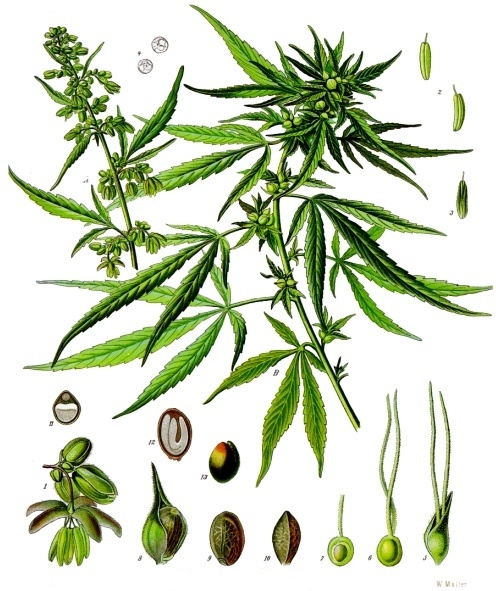
Cannabis is the single most widely used psychoactive substance on Earth outside of alcohol and caffeine, and arguably the one most poorly understood by the people debating it. Derived from the dried flowers of Cannabis sativa, Cannabis indica, and their countless hybrids, it has been cultivated by humans for at least 12,000 years -- longer than wheat, longer than rice, longer than almost any crop still grown today. People have smoked it, eaten it, brewed it into tea, pressed it into hashish, rubbed it on wounds, woven its fibers into rope, and offered it to gods. No other plant occupies such a strange position in human civilization: simultaneously sacred and criminal, medicine and menace, the subject of more research papers and more prison sentences than perhaps any other organism.
The primary psychoactive compound in cannabis is delta-9-tetrahydrocannabinol (THC), a partial agonist at cannabinoid CB1 receptors throughout the brain. But reducing cannabis to "THC" is like reducing wine to "ethanol." The plant produces over 140 known cannabinoids, more than 200 terpenes, and a constellation of flavonoids that interact in ways researchers are still mapping. This complexity is why two strains with identical THC percentages can produce wildly different experiences -- one leaving you giggly and creative, the other bolting you to the couch in philosophical silence. The cannabis community calls this the "entourage effect," and while the science is still catching up, the lived experience of millions of users confirms that the whole plant is more than the sum of its parts.
What makes cannabis pharmacologically fascinating is its target: the endocannabinoid system (ECS), a retrograde neuromodulatory network that your body runs regardless of whether you have ever touched cannabis. The ECS regulates pain, appetite, mood, memory, immune function, and reproductive processes. When you smoke a joint, THC essentially impersonates anandamide -- your brain's own endocannabinoid, named after the Sanskrit word for "bliss" -- and hijacks a system that evolution spent hundreds of millions of years building. This is why the cannabis high touches so many dimensions of experience simultaneously: hunger, time perception, music appreciation, anxiety, creativity, and bodily sensation all shift at once because they are all under endocannabinoid regulation.
The contemporary cannabis landscape is one of radical transformation. As of 2026, recreational use is legal in over 24 US states, all of Canada, Germany, Uruguay, Thailand (with evolving regulations), and a growing list of nations. The US market alone exceeds $30 billion annually. Yet cannabis remains a Schedule I substance under US federal law, classified alongside heroin -- a contradiction that shapes everything from banking access to research funding. Meanwhile, approximately 30% of regular users meet criteria for cannabis use disorder, cannabis hyperemesis syndrome has received its own WHO diagnostic code, and the average THC content of commercial flower has roughly tripled since the 1990s. Cannabis is not the harmless herb some advocates claim, nor the societal destroyer prohibitionists warned of. It is a pharmacologically complex, deeply human substance that demands honest, nuanced understanding.
What the Community Wants You to Know
Many medical professionals still hold outdated views about cannabis and psychedelics, including claims that marijuana is commonly laced with LSD or that LSD use inevitably causes psychosis. While being open with doctors about drug use is important, their information about these substances is sometimes based on stigma rather than evidence.
High-dose cannabis experiences, especially from edibles, can feel as intense as a full psychedelic trip. Having a trip sitter, calming music, and sniffing black pepper (which contains beta-caryophyllene, a CB2 agonist) are recommended strategies for managing overwhelming experiences.
After using psychedelics like LSD or psilocybin, many users report that cannabis produces noticeably more psychedelic effects than before, including vivid colors, introspective thinking, pattern recognition, and mild visual distortions. This change appears to be long-lasting.
Safety at a Glance
High Risk- Start Low, Go Slow
- First time (inhalation): one small puff, wait 15 minutes. Modern cannabis is dramatically more potent than anything a...
- Toxicity: Acute Lethality Cannabis has one of the highest therapeutic indices of any psychoactive substance. No confirmed human...
- Overdose risk: Can You Overdose on Cannabis? You cannot fatally overdose on cannabis through THC toxicity alone....
If someone is in crisis, call 911 or Poison Control: 1-800-222-1222
Dosage
smoked
oral
Duration
smoked
Total: 2.5 hrs – 5 hrssublingual
Total: 3 hrs – 7 hrsoral
Total: 4 hrs – 10 hrsHow It Feels
The first thing you notice, within a minute or two of inhalation, is a subtle shift in the texture of your thoughts. It is not dramatic -- more like your eyes adjusting to different light. Your internal monologue loosens. The rigid, task-oriented quality of sober thinking gives way to something fluid and associative. A warmth spreads through the chest and face, and there is a physical relaxation -- a release of tension you may not have realized you were carrying -- that feels like your body sighing.
Within fifteen minutes, the world reorganizes. Music is the most universally reported enhancement: instruments separate, melodies acquire emotional weight they did not previously carry, and familiar songs reveal structural details that were always there but somehow invisible. Food transforms similarly -- not just tasting better, but tasting more. The sweetness of fruit becomes almost overwhelming. Textures in your mouth become events. This is "the munchies," driven by real pharmacological changes in gustatory processing, amplified by ghrelin release stimulating actual hunger.
Time slows. Five minutes can feel like twenty. A four-minute song feels like an entire emotional journey. Conversations develop strange recursive loops -- you start a sentence, lose the thread halfway through, find it amusing, start explaining why, then realize you have been talking for what feels like ten minutes but was actually thirty seconds. The short-term memory disruption is measurable: THC inhibits glutamate transmission in the hippocampus. Reddit users consistently describe the "wait, what was I just saying?" phenomenon as one of the most characteristic aspects of being high.
At moderate doses, there is a heightened sense of novelty and humor. Familiar objects become interesting again. There is a quality of noticing things you normally filter out: the pattern in wood grain, the way light falls through a window. Many users describe this as cannabis's most valuable quality: a temporary reset of habituation.
The physical dimension varies enormously. Some strains produce a heavy body high -- limbs feel weighted, the couch becomes extraordinarily comfortable, and standing up seems mildly heroic. Others produce a buzzy energy that enhances walks and conversations. Heart rate increases by 20-50 bpm. Dry mouth is nearly universal. Red eyes are common.
Higher doses, particularly edibles, cross into territory that users compare to low-dose psychedelics. Closed-eye visuals emerge, time dilation intensifies, and for a significant minority, the experience tilts toward anxiety: a creeping paranoia and self-consciousness that feeds on itself. This is pharmacological reality rooted in dose-dependent amygdala effects, and is the most common reason for cannabis-related emergency visits.
The comedown from smoked cannabis is gentle -- a gradual return over two to three hours, with pleasant drowsiness and residual appetite. Edibles unwind more slowly, sometimes leaving next-morning fog that users call being "stoned over."
Subjective Effects
The effects listed below are based on the Subjective Effect Index (SEI), an open research literature based on anecdotal reports and personal analyses. They should be viewed with a healthy degree of skepticism. These effects will not necessarily occur in a predictable or reliable manner, although higher doses are more liable to induce the full spectrum of effects.
Physical Effects
Physical(28)
- Appetite changes— Complex alterations in hunger, food preferences, and eating patterns that go beyond simple suppressi...
- Appetite enhancement— A distinct increase in hunger and desire for food, often accompanied by enhanced enjoyment of taste ...
- Appetite suppression— A distinct decrease in hunger and desire to eat, ranging from reduced interest in food to complete d...
- Bronchodilation— Bronchodilation is the widening of the bronchial airways in the lungs, reducing resistance to airflo...
- Changes in felt gravity— A distortion of one's proprioceptive sense of gravity in which the perceived direction of gravitatio...
- Decreased blood pressure— Decreased blood pressure (hypotension) is a drop in arterial blood pressure below normal levels, com...
- Decreased libido— Decreased libido is a diminished interest in and desire for sexual activity, commonly caused by subs...
- Dehydration— A state of insufficient bodily hydration manifesting as persistent thirst, dry mouth, and physical d...
- Dizziness— A sensation of spinning, swaying, or lightheadedness that impairs balance and spatial orientation, o...
- Dry mouth— A persistent, uncomfortable reduction in saliva production causing the mouth and throat to feel parc...
- Headache— A painful sensation of pressure, throbbing, or aching in the head that can range from a dull backgro...
- Increased heart rate— A noticeable acceleration of heartbeat that can range from a subtle awareness of one's pulse to a fo...
- Increased libido— A marked enhancement of sexual desire, arousal, and sensitivity to erotic stimuli that can range fro...
- Insomnia— A persistent inability to fall asleep or maintain sleep despite physical tiredness, often characteri...
- Laughter fits— Spontaneous, uncontrollable, and often prolonged episodes of intense laughter that erupt without any...
- Motor control loss— A distinct decrease in the ability to control one's physical body with precision, balance, and coord...
- Muscle relaxation— The experience of muscles throughout the body losing their rigidity and tension, becoming noticeably...
- Nausea— An uncomfortable sensation of queasiness and stomach discomfort that may or may not lead to vomiting...
- Nausea suppression— Nausea suppression is the pharmacological reduction or elimination of nausea and the urge to vomit, ...
- Pain relief— A suppression of negative physical sensations such as aches and pains, ranging from dulled awareness...
- Perception of bodily heaviness— Perception of bodily heaviness is the subjective feeling that one's body has become dramatically hea...
- Perception of bodily lightness— Perception of bodily lightness is the subjective feeling that one's body has become dramatically lig...
- Physical euphoria— An intensely pleasurable bodily sensation that can manifest as waves of warmth, tingling electricity...
- Sedation— A state of deep physical and mental calming that manifests as a progressive desire to remain still, ...
- Seizure— Uncontrolled brain electrical activity causing convulsions and loss of consciousness -- a life-threa...
- Seizure suppression— Seizure suppression is the pharmacological reduction or prevention of seizures through substances th...
- Stimulation— A state of heightened physical and mental energy characterized by increased wakefulness, elevated mo...
- Vasodilation— Vasodilation is the relaxation and widening of blood vessels, leading to increased blood flow, reduc...
Tactile(2)
- Spontaneous tactile sensations— Unprompted physical sensations that arise without external touch or stimulus, manifesting as tinglin...
- Tactile enhancement— The sense of touch becomes dramatically heightened, making physical contact feel intensely pleasurab...
Cognitive & Perceptual Effects
Visual(12)
- Brightness alteration— Perceived increase or decrease in environmental brightness beyond actual illumination levels, common...
- Colour enhancement— An intensification of the brightness, vividness, and saturation of colors in the external environmen...
- Depth perception distortions— Alterations in how the distance of objects within the visual field is perceived, causing layers of s...
- Double vision— The visual experience of seeing a single object as two separate, overlapping images, similar to cros...
- Geometry— The experience of perceiving complex, ever-shifting geometric patterns superimposed over the visual ...
- Internal hallucination— Vivid, detailed visual experiences perceived within an imagined mental landscape that can only be se...
- Pattern recognition enhancement— An increased ability and tendency to perceive meaningful patterns, faces, and images within ambiguou...
- Shadow people— The perception of dark, humanoid silhouettes lurking in peripheral vision or standing in direct line...
- Tracers— Moving objects leave visible trails of varying length and opacity behind them, similar to long-expos...
- Visual acuity suppression— Vision becomes blurred, indistinct, and out of focus, as though looking through a smudged lens. Fine...
- Visual disconnection— A dissociative visual effect involving a progressive detachment from visual perception, ranging from...
- Visual haze— A translucent fog or haze overlays the visual field, softening the environment and reducing clarity....
Cognitive(38)
- Analysis enhancement— A perceived improvement in one's ability to logically deconstruct concepts, recognize patterns, and ...
- Analysis suppression— Analysis suppression is a cognitive impairment in which the capacity for logical reasoning, critical...
- Anxiety— Intense feelings of apprehension, worry, and dread that can range from a subtle background unease to...
- Anxiety suppression— A partial to complete suppression of anxiety and general unease, producing a calm, relaxed mental st...
- Cognitive euphoria— A cognitive and emotional state of intense well-being, elation, happiness, and joy that manifests as...
- Conceptual thinking— A shift in the nature of thought from verbal, linear sentence structures to intuitive, non-linguisti...
- Confusion— An impairment of abstract thinking marked by a persistent inability to grasp or comprehend concepts ...
- Creativity enhancement— An increase in the ability to imagine new ideas, overcome creative blocks, think about existing conc...
- Delusion— A delusion is a fixed, false belief that is held with unshakeable certainty and is impervious to con...
- Depersonalization— A detachment from one's own sense of self, body, or mental processes, as if observing oneself from o...
- Depression— A persistent state of low mood, emotional numbness, hopelessness, and diminished interest or pleasur...
- Derealization— A perceptual disturbance in which the external world feels profoundly unreal, dreamlike, or artifici...
- Dream suppression— Dream suppression is a decrease in the intensity, frequency, and recollection of dreams — ranging fr...
- Emotion intensification— A dramatic amplification of emotional responses in which feelings — whether positive or negative — b...
- Feelings of impending doom— Feelings of impending doom is the sudden onset of an overwhelming, visceral certainty that something...
- Focus enhancement— An enhanced ability to direct and sustain attention on a single task or stimulus with unusual clarit...
- Focus suppression— Focus suppression is a diminished capacity to direct and sustain attention on a chosen target — a ta...
- Immersion enhancement— A heightened capacity to become fully absorbed and engrossed in external media such as music, films,...
- Increased sense of humor— A general amplification of one's sensitivity to finding things humorous and amusing, often causing p...
- Introspection— An enhanced state of self-reflective awareness in which one feels drawn to examine their own thought...
- Irritability— Irritability is a sustained state of emotional reactivity in which the threshold for annoyance, frus...
- Jamais vu— Jamais vu is the unsettling experience of encountering something deeply familiar — a word, a place, ...
- Memory suppression— A dose-dependent inhibition of one's ability to access and utilize short-term and long-term memory, ...
- Mindfulness— Mindfulness in the substance context refers to a state of heightened present-moment awareness in whi...
- Motivation suppression— Motivation suppression is a state of diminished drive and willingness to engage in goal-directed beh...
- Multiple thought streams— The experience of having more than one internal narrative or stream of consciousness simultaneously ...
- Music appreciation enhancement— A profound enhancement of one's enjoyment and emotional connection to music, making songs feel deepl...
- Novelty enhancement— A feeling of increased fascination, awe, and childlike wonder attributed to everyday concepts, objec...
- Paranoia— Irrational suspicion and belief that others are watching, plotting against, or intending harm toward...
- Personal meaning enhancement— Personal meaning enhancement is a state in which everyday events, coincidences, song lyrics, environ...
- Psychosis— Psychosis is a serious psychiatric state involving a fundamental break from consensus reality — char...
- Sensed presence— Sensed presence is the vivid and often unshakeable feeling that an unseen conscious being — whether ...
- Sleepiness— A progressive onset of drowsiness, heaviness, and the desire to sleep that pulls the individual towa...
- Suggestibility enhancement— Heightened receptivity to external suggestions, ideas, and influence, commonly experienced during ps...
- Thought connectivity— A state in which disparate thoughts, concepts, and ideas become fluidly and spontaneously interconne...
- Thought deceleration— The experience of thoughts occurring at a markedly reduced pace, as if the mind has been placed into...
- Thought loops— Becoming trapped in a repeating cycle of thoughts, actions, and emotions that loops every few second...
- Time distortion— Subjective perception of time becomes dramatically altered — minutes may feel like hours, or hours p...
Auditory(2)
- Auditory distortion— Auditory distortion is the experience of sounds becoming warped, pitch-shifted, flanged, or otherwis...
- Auditory enhancement— Auditory enhancement is a heightened sensitivity and appreciation of sound in which music, voices, a...
Multi-sensory(3)
- Gustatory enhancement— Gustatory enhancement is the experience of tastes becoming significantly more vivid, nuanced, and pl...
- Memory replays— Memory replays are vivid, multisensory re-experiences of past events that go far beyond normal recal...
- Synaesthesia— Stimulation of one sense triggers involuntary experiences in another — seeing sounds as colors, tast...
Transpersonal(2)
- Ego death— A profound dissolution of the sense of self in which personal identity, memories, and the boundary b...
- Spirituality enhancement— A profound intensification of spiritual feelings, mystical awareness, and a sense of sacred connecti...
Community Insights
Common Misconceptions(2)
Many medical professionals still hold outdated views about cannabis and psychedelics, including claims that marijuana is commonly laced with LSD or that LSD use inevitably causes psychosis. While being open with doctors about drug use is important, their information about these substances is sometimes based on stigma rather than evidence.
Based on 1 community posts · 492 combined upvotes
Many people believe quitting cannabis is easy because it is not physically addictive in the way opioids are. In reality, heavy daily users often experience significant withdrawal symptoms including cravings, lack of motivation, increased agitation, headaches, lethargy, and vivid dreams for weeks after stopping.
Based on 2 community posts · 146 combined upvotes
Harm Reduction(6)
High-dose cannabis experiences, especially from edibles, can feel as intense as a full psychedelic trip. Having a trip sitter, calming music, and sniffing black pepper (which contains beta-caryophyllene, a CB2 agonist) are recommended strategies for managing overwhelming experiences.
Based on 3 community posts · 306 combined upvotes
Cannabis-induced psychosis, while rare, is more common in male teenagers and young adults. Warning signs include persistent panic attacks after smoking, dissociation, visual static, racing thoughts, and a feeling of struggling to stay ahead of a threatening mental state. If you experience these symptoms, stop using and seek professional help.
Based on 2 community posts · 248 combined upvotes
Cannabis can reliably trigger paranoia and anxiety in some users, especially in dark or quiet settings. This often manifests as intrusive scary thoughts that feel impossible to shake. If cannabis consistently causes paranoia, this pattern is unlikely to improve and it may be best to stop using.
Based on 2 community posts · 238 combined upvotes
If you have a family history of schizophrenia or other psychotic disorders, cannabis use carries a significant risk of triggering psychotic episodes. Users with predisposition report that cannabis worsened their depression initially and that subsequent psychedelic use triggered full psychotic breaks requiring hospitalization.
Based on 1 community posts · 191 combined upvotes
Edibles have a much slower onset than smoking or vaping (1-2 hours vs 5-15 minutes). A common mistake is re-dosing because you think the first dose was weak, only to have both doses hit at once. Wait at least 2 hours before considering a second dose.
Based on 2 community posts · 177 combined upvotes
Community Wisdom(3)
After using psychedelics like LSD or psilocybin, many users report that cannabis produces noticeably more psychedelic effects than before, including vivid colors, introspective thinking, pattern recognition, and mild visual distortions. This change appears to be long-lasting.
Based on 3 community posts · 254 combined upvotes
For many users, cannabis shifts from being enjoyable to producing primarily derealization, time distortion, and mental noise rather than clarity. This is in contrast to classical psychedelics like psilocybin which users describe as producing mental clarity and deeper self-insight.
Based on 2 community posts · 193 combined upvotes
Terpenes like myrcene (found in mangoes and indica strains) modulate the cannabis high. Eating a mango 30-60 minutes before consumption is a widely reported method for intensifying and extending the experience, though scientific understanding of terpene-THC interactions remains limited.
Based on 1 community posts · 131 combined upvotes
Set & Setting(2)
Cannabis-induced thought loops about death and existential dread are a common paranoia pattern, especially when smoking alone at night. Recognizing these thought spirals as a drug effect rather than genuine insight can help break the loop. The mantra approach of labeling anxious thoughts as not your true self can be effective.
Based on 2 community posts · 238 combined upvotes
Cannabis tinctures taken a couple times per week at moderate doses can provide nootropic-like benefits including improved creativity, lowered anxiety, and enhanced empathy. Supplements like lion's mane, omega-3s, and bacopa monnieri may help offset short-term memory and motivation side effects.
Based on 1 community posts · 61 combined upvotes
Dosage Guidance(3)
For psychedelic-level experiences with edibles, a tolerance break of at least one week is essential. Users report that 12.5-25mg THC with low CBD content can produce full psychedelic effects including dimensional travel, mystical experiences, and ego dissolution, but only after a proper tolerance reset.
Based on 2 community posts · 222 combined upvotes
When making homemade edibles, potency can vary wildly between batches and even between pieces of the same batch. Starting with a small portion (half or quarter of what you think is a dose) is critical. Users report that even experienced smokers can be caught off guard by edible intensity.
Based on 2 community posts · 177 combined upvotes
Microdosing cannabis is viable and underappreciated. One small hit from a vaporizer or 10-20mg of edible can provide improved interest, motivation, and creativity without significant impairment, with effects wearing off in about 3 hours for inhaled doses.
Based on 2 community posts · 107 combined upvotes
Combination Warnings(2)
Combining cannabis with exercise, particularly running, can produce an intensified state that some users compare to a low-dose psychedelic experience. The runner's high combined with cannabis creates vivid colors, heightened introspection, and altered perception of others. This effect is stronger in those who have previously used psychedelics.
Based on 2 community posts · 177 combined upvotes
Smoking cannabis on a psilocybin microdose day can synergistically produce a half-conscious psychedelic state with color visions and enhanced creativity. Users describe entering a flow state where creative output increases significantly, but this combination should be approached with respect for both substances.
Based on 1 community posts · 81 combined upvotes
Pharmacology
The Endocannabinoid System
Before understanding how cannabis works, you need to understand the system it acts on. The endocannabinoid system (ECS) is a retrograde neuromodulatory network present in virtually all vertebrates. It consists of endogenous ligands (anandamide and 2-AG), two receptor types (CB1 and CB2), and the enzymes that build and break them down (FAAH and MAGL).
The ECS operates through retrograde signaling. When a postsynaptic neuron fires, it synthesizes endocannabinoids on-demand from membrane lipids. These travel backwards across the synapse to activate presynaptic CB1 receptors, reducing further neurotransmitter release -- a feedback brake that regulates both excitatory (glutamate) and inhibitory (GABA) signaling. When THC floods this system, it disrupts that braking mechanism, which is why the cannabis high affects so many cognitive processes simultaneously.
How THC Works
THC is a partial agonist at CB1 receptors, among the most abundant G-protein-coupled receptors in the brain. Their distribution maps onto the subjective experience: hippocampus (memory -- hence short-term memory disruption), prefrontal cortex (executive function and the source of both creative ideation and anxious overthinking), basal ganglia and cerebellum (motor coordination, time perception), nucleus accumbens (reward and euphoria via indirect dopamine release), and amygdala (emotional processing -- the origin of both anxiety relief and paranoia).
CB1 receptors are nearly absent from the brainstem, which controls breathing and cardiac rhythm. This is why cannabis has an extraordinarily high therapeutic index: unlike opioids, it cannot cause fatal respiratory depression.
CBD and the Entourage Effect
CBD shapes the cannabis experience through negative allosteric modulation of CB1 receptors (turning down THC's volume), 5-HT1A agonism (anxiolytic effects), TRPV1 activation (pain modulation), and FAAH inhibition (raising endogenous anandamide levels). This is why high-CBD strains produce a mellower, less anxiety-prone experience.
The plant's terpenes also contribute: beta-caryophyllene directly activates CB2 receptors and is why black pepper is a folk remedy for cannabis anxiety. Myrcene, limonene, linalool, and pinene each shape the subjective character of different cultivars.
Pharmacokinetics
Inhalation delivers THC to the brain within seconds, peaking at 15-30 minutes, lasting 2-4 hours. Oral consumption is fundamentally different: THC undergoes first-pass hepatic metabolism, converting to 11-hydroxy-THC -- a metabolite that crosses the blood-brain barrier more efficiently, producing more intense, longer, more psychedelic-adjacent effects. Onset takes 45-120 minutes, peak occurs at 2-4 hours, and total duration can reach 6-10 hours. This delayed onset is the most common cause of overconsumption: people eat a brownie, feel nothing after an hour, eat another, and then find themselves uncomfortably high for six hours.
Detection Methods
Cannabis is one of the most commonly tested substances in workplace and legal drug screening. THC's primary metabolite, THC-COOH (11-nor-9-carboxy-THC), is lipophilic and is stored in fat tissue, leading to prolonged detection windows compared to most other drugs. In urine, THC-COOH is detectable for 3-5 days after single use, 7-21 days after moderate regular use, and potentially 30-90+ days after daily heavy use, due to gradual release from fat stores.
Standard immunoassay urine screens use a cutoff of 50 ng/mL for THC-COOH, with confirmatory GC-MS or LC-MS/MS testing at 15 ng/mL. In blood, THC itself is detectable for 1-2 days, though heavy users may test positive for up to a week. Saliva testing detects THC for 24-72 hours (up to 30 days in heavy users) and is increasingly used in roadside testing. Hair follicle testing can detect cannabis use for up to 90 days.
Reagent testing is not applicable to cannabis plant material in the same way as other substances. For cannabis concentrates and edibles, laboratory potency testing via high-performance liquid chromatography (HPLC) provides accurate THC and CBD content. Home potency test kits exist but are less reliable than laboratory analysis.
Interactions
Popular Combinations
“When making homemade edibles, potency can vary wildly between batches and even between pieces of the same batch. Starting with a small portion (half or quarter of what you think is a dose) is critical. Users report that even experienced smokers can be caught off guard by edible intensity.”
177| Substance | Status | Note |
|---|---|---|
| 1,3-Butanediol | Caution | Cannabis can unpredictably intensify psychedelic effects and increase anxiety |
| 25E-NBOH | Caution | Cannabis can unpredictably intensify psychedelic effects and increase anxiety |
| 2C-T | Caution | Cannabis can unpredictably intensify psychedelic effects and increase anxiety |
| 2C-T-2 | Caution | Cannabis can unpredictably intensify psychedelic effects and increase anxiety |
| 2C-T-21 | Caution | Cannabis can unpredictably intensify psychedelic effects and increase anxiety |
| 1B-LSD | Uncertain | — |
| 1cP-AL-LAD | Uncertain | — |
| 1cP-LSD | Uncertain | — |
| 1cP-MiPLA | Uncertain | — |
| 1P-ETH-LAD | Uncertain | — |
History

Cannabis may be the oldest cultivated plant that humans still use for its original purposes. Archaeological evidence from Central Asia places human interaction with cannabis at roughly 12,000 years ago -- predating agriculture itself. By 4000 BCE, hemp fiber was being woven in China. By 2737 BCE (traditionally), Emperor Shen Nung's pharmacopoeia listed cannabis for rheumatism and malaria. The plant traveled trade routes to India -- where it became one of five sacred plants, offered to Shiva and consumed as bhang -- the Middle East, Africa, and Europe.
The ancient world treated cannabis as unremarkable. Herodotus described Scythians hotboxing funeral tents in the 5th century BCE. Egyptian papyri reference it. Medieval Islamic physicians prescribed it despite periodic bans. For most of human history, prohibiting cannabis would have seemed as strange as prohibiting garlic.
Western medicine discovered cannabis through colonialism. In 1842, Irish physician William O'Shaughnessy brought preparations from India to Britain, publishing research on seizures, pain, and spasm. By the late 19th century, cannabis tinctures from Eli Lilly, Parke-Davis, and Squibb sat on pharmacy shelves. The American Pharmacopoeia listed cannabis from 1851 to 1942.
Prohibition began not with science but with politics. Harry Anslinger waged a campaign in the 1930s that was explicitly racist -- linking "marihuana" to Mexican immigrants and Black jazz musicians. The 1937 Marihuana Tax Act passed despite AMA opposition. The 1970 Controlled Substances Act placed cannabis in Schedule I -- alongside heroin and above fentanyl -- where it remains federally.
The modern legalization wave began with California's Proposition 215 in 1996 and accelerated through Colorado and Washington's 2012 recreational measures. Canada legalized nationally in 2018, Germany in 2024. As of 2026, over 24 US states permit recreational use and research is finally expanding after decades of Schedule I restrictions.
Harm Reduction
Start Low, Go Slow
- First time (inhalation): one small puff, wait 15 minutes. Modern cannabis is dramatically more potent than anything available before 2010
- First time (edibles): 2.5-5 mg THC, wait at least 2.5 hours before redosing. Edible overconsumption is the most common cannabis emergency
- Concentrates: 60-90% THC, not appropriate for inexperienced users
Safer Methods
- Vaporization over smoking -- lower combustion byproduct exposure, easier dose control
- High-CBD strains reduce anxiety and paranoia risk
- Dry herb vaporizers over cartridges -- the EVALI outbreak was linked to illicit cartridges with vitamin E acetate
Who Should Not Use Cannabis
- Under 25: the developing brain is genuinely vulnerable to lasting cognitive and psychiatric effects
- Family history of psychosis or schizophrenia: cannabis can trigger psychotic episodes in predisposed individuals
- Pregnancy: evidence of harm to fetal neurodevelopment
- Cardiovascular disease: THC increases heart rate and can trigger cardiac events
Dangerous Combinations
- Cannabis + psychedelics: the most common trigger for difficult psychedelic experiences. Cannabis dramatically amplifies intensity
- Cannabis + alcohol: "greening out" (nausea, vomiting, panic) is far more likely when combining
- Cannabis + CNS depressants: additive sedation, impaired breathing
- Cannabis + stimulants: increased anxiety, paranoia, cardiovascular strain
If Things Go Wrong
- Chew black peppercorns -- beta-caryophyllene acts on CB2 receptors and may reduce anxiety
- Take CBD if available to dampen THC effects
- Cold water on wrists and face for grounding
- Remember: "This is temporary. No one has died from this. It will pass."
Recognizing Dependence
Cannabis use disorder affects roughly 1 in 10 users. Warning signs: needing cannabis to enjoy activities, anxiety without it, neglecting responsibilities, failed attempts to cut back. Support communities include r/leaves, r/Petioles, and SMART Recovery.
Toxicity & Safety
Acute Lethality
Cannabis has one of the highest therapeutic indices of any psychoactive substance. No confirmed human death from THC toxicity alone exists in the medical literature. The LD50 would require consuming roughly 1,500 pounds within 15 minutes -- a physical impossibility. CB1 receptors are nearly absent from brainstem regions controlling respiration, so cannabis cannot cause the fatal respiratory depression that makes opioid overdoses lethal. This does not mean cannabis is without medical risk.
Cardiovascular Effects
THC increases heart rate by 20-100% and causes transient blood pressure changes. For healthy individuals, this is benign. For those with pre-existing cardiovascular disease or undiagnosed arrhythmias, cannabis has been associated with rare cases of myocardial infarction and stroke, particularly in the first hour after inhalation.
Cannabis Hyperemesis Syndrome (CHS)
CHS is an increasingly recognized consequence of heavy, long-term use. It received its own WHO diagnostic code in 2025, reflecting growing prevalence. CHS presents as cyclical severe nausea, vomiting, and abdominal pain in daily users. The hallmark is compulsive hot showering, which provides temporary relief via TRPV1 receptor activation. CHS can cause dangerous dehydration and electrolyte imbalances. The only definitive treatment is complete cessation.
Psychiatric Risks
Heavy adolescent cannabis use approximately doubles the risk of psychotic disorders in genetically predisposed individuals. The mechanism involves THC disrupting endocannabinoid-mediated neurodevelopment during a critical maturation window. Individuals carrying certain COMT and AKT1 gene variants appear substantially more vulnerable.
Cognitive and Respiratory Effects
Chronic heavy use causes measurable deficits in attention, memory, and processing speed. In adults, most effects reverse within weeks of abstinence. In adolescents, some cognitive effects may be more persistent. Smoking cannabis exposes lungs to combustion byproducts similar to tobacco, causing chronic bronchitis and airway inflammation. Vaporization reduces this exposure by roughly 95%; edibles eliminate it entirely.
Addiction Potential
Cannabis has moderate addictive potential that is consistently underestimated by users and overstated by prohibitionists. Approximately 10% of all users develop cannabis use disorder (CUD), rising to roughly 17% among those who begin in adolescence and 25-50% among daily users. Psychological dependence -- the feeling that life is duller, more anxious, or less manageable without cannabis -- is the dominant feature. Physical dependence also occurs with regular heavy use: withdrawal symptoms include irritability, insomnia, decreased appetite, anxiety, depression, vivid dreams (REM rebound), and restlessness, typically beginning 24-48 hours after cessation, peaking around day 3-5, and largely resolving within 2-3 weeks. Cannabis withdrawal is never medically dangerous but can be subjectively miserable enough to drive relapse. No FDA-approved pharmacotherapy for CUD currently exists; behavioral interventions remain the primary treatment approach.
Overdose Information
Can You Overdose on Cannabis?
You cannot fatally overdose on cannabis through THC toxicity alone. However, cannabis overconsumption is extremely common, deeply unpleasant, and is the most frequent reason for cannabis-related emergency department visits.
Recognizing Overconsumption ("Greening Out")
- Severe anxiety and panic: the most common symptom, sometimes escalating to full panic attacks
- Paranoia: ranging from vague unease to acute persecutory thinking
- Tachycardia: heart rate exceeding 120 bpm, which feeds the anxiety cycle
- Nausea and vomiting: especially when combined with alcohol
- Dizziness, disorientation, pallor, and sweating
- Depersonalization: feeling detached from your body, frightening for the unfamiliar
- Rare at very high doses: transient psychotic symptoms
What To Do
- Remind yourself this is temporary and not dangerous. Write it down: "I took too much cannabis. This will pass"
- Move to a calm, comfortable environment. Reduce stimulation
- Breathe slowly: in for 4 counts, hold for 4, out for 6
- Chew or sniff black peppercorns -- beta-caryophyllene may reduce cannabis anxiety
- Take CBD if available to dampen THC intensity
- Drink cold water; place a cold cloth on wrists or neck
- Do not fight the experience. Acceptance shortens acute distress
For helpers: Stay calm -- your composure is contagious. Do not leave a distressed person alone. Engage them in simple, grounding conversation.
When to Call 911
- Chest pain that does not resolve
- Seizures
- Severe persistent vomiting with inability to keep fluids down
- Loss of consciousness
- Symptoms of psychosis or suicidal ideation
- Suspected product contamination with other substances
Good Samaritan laws protect you in most jurisdictions. Never hesitate to call for help because of legal concerns.
Tolerance
| Full | develops with prolonged and repeated use |
| Half | 1 - 2 weeks |
| Zero | 2 - 3 weeks |
Cross-tolerances
Legal Status
Cannabis legal status varies dramatically worldwide and is in a period of rapid change. In the United States, cannabis remains a Schedule I controlled substance under federal law, but as of 2024, 24 states plus Washington D.C. have legalized recreational cannabis, and 38 states have medical cannabis programs. This creates a complex patchwork of conflicting state and federal law.
In the United Kingdom, cannabis is a Class B substance under the Misuse of Drugs Act 1971, though a limited medical cannabis program has been available since November 2018. In the European Union, approaches vary widely: the Netherlands tolerates retail sale through its coffeeshop system, Germany legalized personal possession and home cultivation in 2024, while other nations maintain strict prohibition. Portugal decriminalized personal possession of all drugs in 2001.
Canada fully legalized recreational cannabis in October 2018 under the Cannabis Act. Uruguay legalized in 2013 with state-controlled sales. In Australia, the Australian Capital Territory legalized personal use and cultivation in 2020, while other territories maintain it as a controlled substance with medical access. Thailand briefly decriminalized cannabis in 2022 before moving toward re-regulation.
Experience Reports (6)
Tips (10)
Edibles are the number one cause of cannabis emergency room visits. Start with 5mg THC or less and wait at least 2 hours before redosing. Edibles pass through the liver, converting THC to 11-hydroxy-THC which is significantly more potent and longer-lasting than inhaled THC.
Edibles: start with 5mg THC or less if you're a beginner. Wait at LEAST 2 full hours before considering taking more. Edible onset is unpredictable and many hospital visits come from people who took a second dose too soon.
If you have a family history of schizophrenia or psychotic disorders, cannabis use significantly increases your risk of triggering these conditions, especially with high-THC strains and during adolescence. This is not anti-drug propaganda; it is well-established in psychiatric research.
Do not drive impaired on cannabis. Reaction time, attention, and coordination are all measurably reduced. THC impairment lasts longer than the subjective high. Wait at least 4-6 hours after use before operating a vehicle.
If cannabis causes you anxiety or paranoia, try strains with higher CBD to THC ratios. CBD modulates the psychoactive effects of THC and reduces anxiety. Having CBD oil on hand can help calm you down if you get too high. Black pepper (chewing peppercorns) also helps some people through the terpene beta-caryophyllene.
If you vape cannabis, only use cartridges from licensed dispensaries. Black market carts have caused serious lung injuries (EVALI). Never buy carts from unlicensed sources, regardless of how the packaging looks.
Community Discussions (12)
A discussion post exploring benzydamine, a local anesthetic with recreationally psychoactive properties including dissociation, delirium, and 'mind's eye' cartoon-like hallucinations, whose mechanism of action is entirely unknown. The author speculates it may interact with cannabinoid receptors and have mild anticholinergic activity.
A user asks whether anyone has experimented with consuming concentrated terpenes (beyond just eating mangos for myrcene) before cannabis consumption to modulate and intensify the high. They are curious about strain-specific terpenes like pinene and how they might interact with THC at higher doses.
A long-time edible user explains techniques for achieving strongly psychedelic cannabis experiences, emphasizing tolerance breaks, high-THC/low-CBD products, and high doses (12.5-25mg THC edibles). They share personal accounts of god-like, dimensional, and mystical experiences achieved exclusively through cannabis edibles.
A user with schizophrenia recounts their journey from daily cannabis use at 18 (which worsened their depression) through DXM, LSD, psilocybin, and eventually DMT as they searched for spiritual meaning while managing a serious mental health condition. The post is a detailed personal history of how hallucinogens intersected with an evolving psychotic disorder.
A user describes telling their conservative 62-year-old father about psychedelics and convincing him to agree to a mountain trip together, seeking advice from the community on how to trip-sit him safely on his first experience. Key questions involve whether to trip alongside him or remain sober.
A user describes their psychiatrist claiming LSD is commonly laced into marijuana and comparing LSD use to heroin or meth, and asks about whether to trust medical professionals who spread misinformation about psychedelics. The experience prompted skepticism about their psychiatrist's credibility and a reluctance to take prescribed antidepressants.
A user who found psychedelics personally therapeutic asks the community whether they are genuinely helping people or just providing justification for drug use, sharing how their own psychedelic exploration coincided with a breakdown in high functioning and a slow rebuilding of a more authentic, happier life. They invite discussion about managing family and friends' skepticism.
A user describes how cannabis produces derealization and mental noise for them rather than clarity, contrasting unfavorably with psilocybin which they find produces mental clarity and deeper self-insight. They express frustration that cannabis no longer feels enjoyable and wonder if this will change over time.
A 19-year-old describes their parents' double standard of encouraging alcohol while reacting to cannabis use as if it were a crime, inviting the community to share similar experiences. The post touches on broader societal hypocrisy around substance stigma.
A user critiques a Vice article promoting cannabis use during pregnancy for morning sickness as dangerously irresponsible, citing peer-reviewed evidence that THC negatively affects the developing brain and that Ondansetron's risks are lower-quality evidence than suggested. They express frustration with idealized narratives about cannabis as a 'miracle drug.'
Further Reading
Timothy Leary
American psychologist who led the Harvard Psilocybin Project, became the most visible advocate for psychedelic drugs in the 1960s counterculture, and was called by Richard Nixon 'the most dangerous man in America.'
Read articleTerence McKenna
American ethnobotanist, author, and lecturer who became the leading intellectual voice of psychedelic culture in the 1990s, known for his advocacy of psilocybin mushrooms and DMT, the Stoned Ape hypothesis, and his Novelty Theory.
Read articleDennis McKenna
American ethnopharmacologist and research pharmacognosist who has spent over four decades studying Amazonian plant medicines, co-authored The Invisible Landscape with his brother Terence, and serves as a founding board member of the Heffter Research Institute.
Read articleRam Dass
Born Richard Alpert, he was an American psychologist who conducted groundbreaking psychedelic research at Harvard alongside Timothy Leary before traveling to India, finding his guru Neem Karoli Baba, and becoming one of the most influential spiritual teachers of the 20th century.
Read articleKen Kesey
American novelist and countercultural icon whose participation in CIA-funded drug experiments at Stanford inspired 'One Flew Over the Cuckoo's Nest' and whose Acid Tests with the Merry Pranksters helped launch the psychedelic era of the 1960s.
Read articleSee Also
Similar by Effects
Same Class
References (4)
- Cannabis Vault - Erowid
Erowid experience vault for Cannabis
erowid - PubChem: Cannabis
PubChem compound page for Cannabis (CID: 5281520)
pubchem - Cannabis - TripSit Factsheet
TripSit factsheet for Cannabis
tripsit - Cannabis - Wikipedia
Wikipedia article on Cannabis
wikipedia
Gallery