
Mindfulness, via Effect Index
Mindfulness
Mindfulness in the substance context refers to a state of heightened present-moment awareness in which attention is fully directed toward immediate experience — thoughts, sensations, emotions — with an attitude of non-judgmental observation, while the usual stream of planning, worrying, and self-referential thinking quiets substantially.
Description
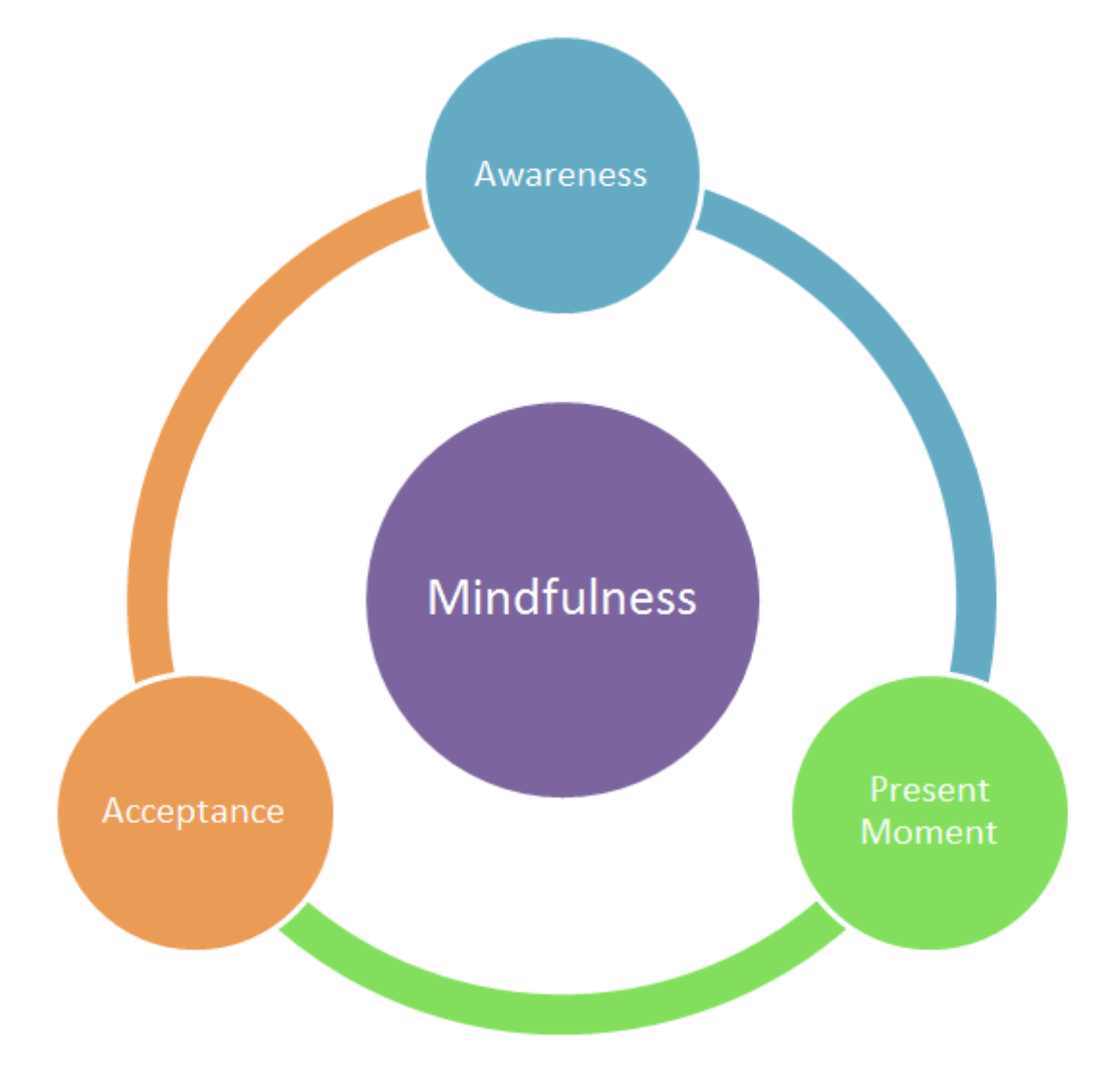
Mindfulness, as a substance-induced cognitive effect, describes a state of consciousness characterized by two complementary qualities: a heightened ability to direct attention fully toward the present moment, and an attitude of non-judgmental acceptance toward whatever arises in that present moment. The habitual mental activities that normally dominate waking consciousness — planning for the future, rehearsing the past, constructing and defending a self-narrative, judging and categorizing experience — become quieter, allowing a more direct and unmediated engagement with immediate reality.
This state closely parallels the mindfulness cultivated through formal meditation practice, but it arises pharmacologically rather than through sustained attentional training. The person may find themselves noticing sensory details with unusual clarity — the texture of a surface, the feeling of breath moving through the body, the quality of light in a room — not because these things have changed, but because the attentional resources normally consumed by internal narrative have been freed up. There is often a sense of the present moment expanding and becoming richer, as if ordinary experience contains vastly more detail and beauty than is normally perceived.
The quality of non-judgment that characterizes mindfulness is particularly significant in therapeutic contexts. When the internal critic — the part of the mind that constantly evaluates, compares, and finds things wanting — is quieted, difficult emotions and memories can be observed without the reflexive patterns of avoidance, suppression, or amplification that normally distort them. This creates a window for emotional processing andinsight that is thought to be one of the primary mechanisms through which psychedelic-assisted therapy produces its effects. The person can see their habitual patterns of thought and emotion clearly, as if from the outside, without being caught up in them.
Substance-induced mindfulness is most commonly associated with psychedelics (psilocybin and LSD are particularly noted for this quality),cannabis at low to moderate doses, certainempathogens (MDMA can produce deep present-moment engagement), andmeditation-enhancing compounds. Interestingly, the mindfulness cultivated during substance experiences sometimes persists or at least leaves a lasting impression on the person's baseline capacity for present-moment awareness — many long-term meditators report that an early psychedelic experience first showed them what a mindful state of consciousness felt like, which then motivated and informed their subsequent meditation practice.
Harm reduction note: While substance-induced mindfulness can be profoundly valuable, it is worth distinguishing it from the robust, portable, and context-independent mindfulness developed through regular meditation practice. Substance-induced states are temporary and context-dependent, and attempting to use substances as a primary means of accessing mindful awareness can become a crutch that prevents the development of genuine attentional skills. The most sustainable approach, supported by both contemplative traditions and emerging research, treats substance experiences as introductions to states of awareness that are then developed and stabilized through ongoing practice.