
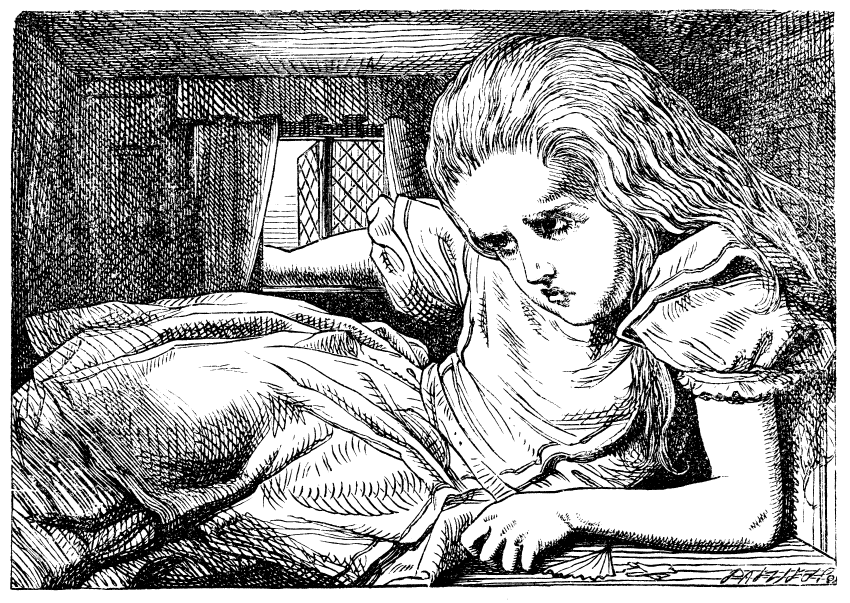
Size distortions by Anonymous, via Effect Index
Perspective distortions
Distortion of perceived depth, distance, and size of real objects, making things appear closer, further, larger, or smaller than they actually are.
Description
Perspective distortions refer to substance-induced alterations in the visual perception of spatial relationships -- the apparent size, distance, depth, proportion, and angular orientation of real objects in the environment. Unlike geometric visual hallucinations, which generate novel visual content overlaid on reality, perspective distortions alter the perception of existing objects, making the real world appear spatially different from its actual configuration.
The visual system constructs spatial perception through the integration of multiple depth cues: binocular disparity (slightly different images from each eye), perspective convergence (parallel lines appearing to meet at a distance), texture gradients, relative size, motion parallax, and occlusion. Higher-order processing in the parietal and temporal cortices integrates these cues into a coherent three-dimensional spatial model. Psychoactive substances can disrupt this integration at various levels, producing characteristic distortions.
Macropsia (objects appearing larger than actual size) and micropsia (objects appearing smaller) are classic perspective distortions reported with psychedelics, cannabis, and some dissociatives. These effects, sometimes called "Alice in Wonderland syndrome" (referencing Lewis Carroll's descriptions, which may have been inspired by his own migraine auras), likely involve altered processing in the extrastriate visual cortex, particularly areas involved in size constancy -- the mechanism that normally ensures an object is perceived as the same size regardless of its distance.
Pelopsia (objects appearing closer than actual) and teleopsia (objects appearing further away) represent distortions of distance perception. These can be particularly disorienting in navigational contexts and may contribute to spatial misjudgments. Dissociatives are particularly prone to producing distance distortions, likely because NMDA receptor blockade affects the processing of binocular disparity cues that are critical for accurate distance judgment.
Psychedelics can produce complex perspective distortions where the angles and proportions of architectural features, faces, or landscapes appear altered. Rooms may seem to tilt or elongate, ceilings may appear higher or lower, and hallways may seem to stretch or compress. These distortions reflect the psychedelic disruption of higher-order spatial processing in the parietal cortex.
Cannabis commonly produces mild perspective distortions, particularly affecting size and distance perception. The effect is usually subtle but can be noticeable, particularly in unfamiliar environments. Deliriants (anticholinergics like diphenhydramine) can produce dramatic perspective distortions as part of their broader perceptual disruption.
Perspective distortions are generally experienced as curious or fascinating rather than distressing, though they can be unsettling when they affect the perception of one's own body (seeing one's hands as abnormally large or small) or when they interfere with spatial navigation. The effect is dose-dependent and self-limiting.
Intensity Levels
Threshold
20%Very subtle alterations in spatial perception. Objects or rooms feel slightly different in proportion but it is hard to specify how.
Light
40%Noticeable perspective shifts. Objects may appear slightly closer or further than expected. Rooms feel mildly distorted in size or proportion.
Moderate
60%Clear distortions. Objects visibly change in apparent size or distance. Architectural features appear altered in angle or proportion. Depth perception unreliable.
Strong
80%Dramatic perspective distortions. Pronounced macropsia or micropsia. Rooms appear to stretch, tilt, or warp. Spatial navigation significantly impaired.
Overwhelming
100%Extreme spatial distortion. The visual environment appears radically different in scale and proportion from reality. Objects may appear impossibly large, small, or distant.